
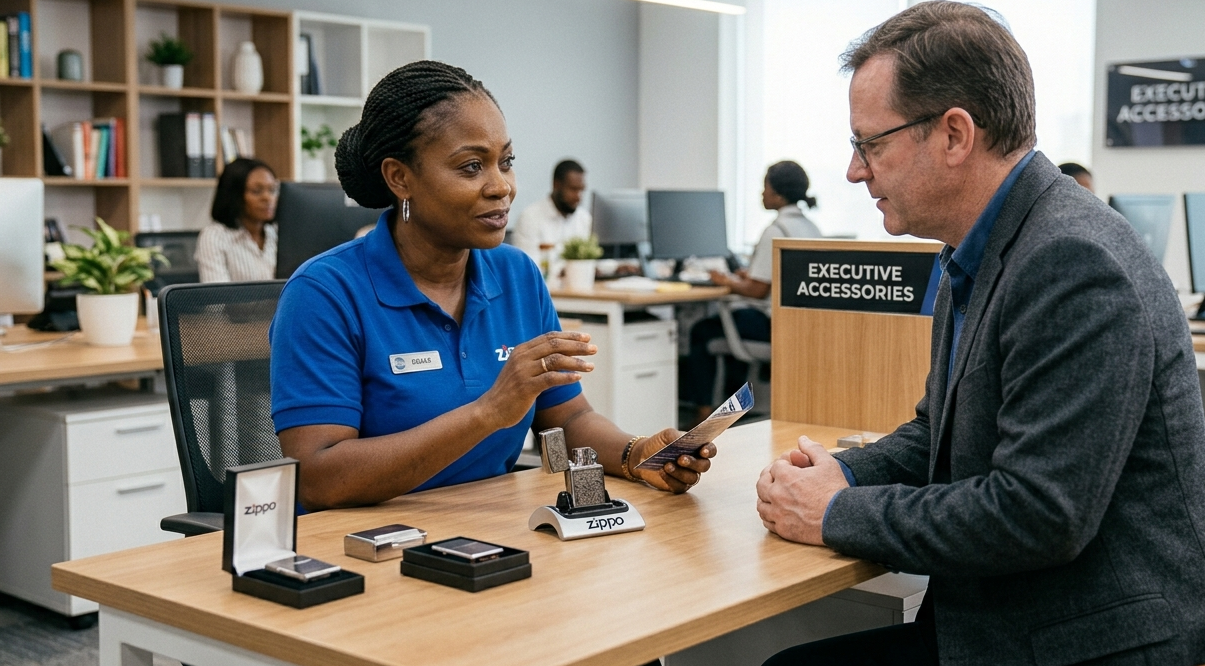
Customers Don’t Buy Products: You are at a convenience store counter. The cashier points to two lighters.
“One dollar or two dollars?”
You grab the one-dollar lighter without thinking. It is a lighter. Why pay double?
Now imagine the exact same scenario, but the question changes:
“Regular or windproof?”
Suddenly, you hesitate. Maybe you even grab the two-dollar one without a second thought.
What changed?
The word “windproof” just reminded you of every frustrating moment you have ever spent huddled against the wind, flicking a dead flame, trying to light a cigarette or a candle or a camp stove while the breeze mocked your efforts.
The product did not change. The price did not change.
You changed.
Your subconscious mind made the decision before your conscious mind could catch up.
The Deeper Truth About How Your Mind Works
Your subconscious mind runs the show. It makes most of your decisions in fractions of a second. It does not care about features or specifications. It cares about one thing.
Avoiding pain.
Your conscious mind thinks it is logical. It thinks it compares prices and weighs options. But your subconscious mind is the one pulling the trigger. It is the one that remembers the wind blowing out your flame. It is the one that feels the frustration of cheap shoes falling apart. It is the one that hates the hassle of figuring out complicated products.
When you understand this, you understand sales.
Customers are not moved by products. They are pushed by their own subconscious pain.
The best salespeople do not desperately explain how good their product is. They find the uncomfortable point already living in the customer’s subconscious mind and they turn it into a reason to buy.
Let me show you exactly how this works with the three biggest objections you will ever face.
Objection Number One: It Is Expensive

When a customer says “it is expensive,” your instinct is to defend.
“Our quality is really good.”
“We offer great value.”
“Compared to competitors, we are actually very reasonable.”
Stop. All of that is noise.
Here is what is really happening in their subconscious mind. They are not struggling with the price. They are struggling with the deeper question, “Will I regret this?”
Their subconscious is running a risk assessment. It is asking, “Is this safe? Will this hurt me? Will I feel stupid after buying this?”
Your job is not to prove you are not expensive. Your job is to rewire that subconscious risk assessment. You need to show them that the real risk is buying the cheap option.
The Shoe Example

Do not say, “These shoes are made with solid materials and are very durable.”
Say this instead. “Expensive shoes might cost more upfront, but they will last two or three years. Cheap shoes look like a deal today. But two months in, the sole comes loose. Three months in, they hurt your feet. You did not save money. You just paid twice. And now you are back here, buying another pair, feeling frustrated all over again.”
Do you see what just happened?
You did not attack the price. You attacked the subconscious fear hiding behind cheapness. You made the expensive option feel safe. You made the cheap option feel like the real risk.
When you reframe it this way, your customer’s subconscious mind relaxes. It stops protecting them from the price and starts protecting them from the pain of buying cheap.
Objection Number Two: This Seems Like Too Much Trouble
Some customers can afford your product. They just do not want the hassle.
Their subconscious mind is exhausted. It has been burned before by products that required hours of setup, confusing manuals, and endless troubleshooting. It does not want another project. It wants peace.
So what do most salespeople do? They pile on specifications.
“Our robot vacuum has 2500Pa suction, 120 minutes of battery life, and advanced LiDAR navigation.”
Their subconscious mind hears this and translates it to, “This is complicated. This will take time. This will be frustrating.”
And it says no.
The Robot Vacuum Example
Do not say, “Our robot vacuum has strong suction, long battery life, and great cleaning performance.”
Say this instead. “When there is hair, dust, and snack crumbs on the floor, you can lie down on the couch and it handles everything by itself. You do not have to lift a finger. You do not have to read a manual. You do not have to schedule anything. It just works.”
Do you see the shift?
You are not selling a machine. You are selling relief from mental load. You are giving their subconscious mind permission to rest. You are telling it, “This will not be another burden. This will be freedom.”
The customer does not want specifications. They want the result of not having to worry. Show them the worry-free result first. Let their subconscious picture a life where the problem simply disappears.
Objection Number Three: I Do Not Trust It
Some customers can afford it. They are willing to deal with setup. But their subconscious mind is terrified of making a bad purchase.
They have been burned before. They bought something that looked great and fell apart. They bought something that promised the world and delivered nothing. Their subconscious is now programmed to be skeptical. It is protecting them from disappointment.
Now they are skeptical. And telling them “do not worry” a hundred times will not do a thing. Their subconscious does not trust words. It trusts patterns. It trusts evidence.
The Car Phone Mount Example

Do not say, “Our mount is very stable and will not fall.”
Say this instead. “To make sure your phone does not fly out during sudden braking, we tested it on sudden stops, bumpy roads, and sharp turns over and over. Every test we ran is one less thing you have to worry about. We have already done the worrying for you.”
Do you see what happened there?
You did not ask for trust. You demonstrated why trust is earned. You gave their subconscious mind evidence. You showed it that you have already anticipated their fears and addressed them.
Every test you mention is one less reason for their subconscious to sound the alarm. Every extra test is one less objection in their mind. You are not persuading them. You are de-escalating their subconscious defense system.
What About “I Will Think About It”?
When a customer says “I will think about it,” their subconscious is saying one of three things.
One, “I am not convinced it is worth the risk.” Go back to Objection Number One.
Two, “I am worried about the mental load.” Go back to Objection Number Two.
Three, “I do not fully trust this.” Go back to Objection Number Three.
Your job is not to push harder. That only makes their subconscious more defensive. Your job is to listen deeper. Find which pain is really driving their hesitation and address that directly.
When you name the fear, you disarm it. When you show relief, you rewire the resistance.
The Simple Framework for Rewiring Subconscious Resistance
Here is a simple framework you can use in any sales conversation.
First, identify the hidden pain. What frustration, fear, or inconvenience is already living in their subconscious mind?
Second, acknowledge it. Show them you understand. When you name their unspoken fear, their subconscious relaxes. It feels seen.
Third, connect your product to the relief of that specific pain. Not to features. To freedom from that discomfort. Give their subconscious a new pattern to hold onto.
The lighter example works because everyone has felt the frustration of a dying flame in the wind. Your subconscious remembers that feeling.
The shoe example works because everyone has bought cheap and regretted it. Your subconscious remembers the disappointment.
The robot vacuum example works because everyone has stared at a messy floor and wished for a magic solution. Your subconscious craves the relief.
The phone mount example works because everyone has watched their phone fly off the dash during a sudden stop. Your subconscious fears that moment.
When you speak to the subconscious memory, you do not have to convince. You just have to remind.
One More Thing About How Your Subconscious Works
This is the underlying truth behind all three objections.
Your subconscious does not buy features. It buys outcomes.
A strong suction feature translates to clean floors without effort. That is a feeling of relief.
Durable materials translate to not having to buy shoes again. That is a feeling of security.
A stable mount translates to a phone not flying during a sharp turn. That is a feeling of safety.
Windproof design translates to getting a flame when it matters. That is a feeling of control.
Features are conscious. Outcomes are subconscious.
People buy outcomes.
The Real Secret of Sales and Subconscious Rewiring
If customers constantly tell you that it is too expensive, that they will think about it, or that they will come back later, the problem may not be your product. It may be your message.
Your conscious pitch is landing on their conscious mind. But their conscious mind is not making the decision. Their subconscious is.
Great sales is not about talking more. It is about understanding what is already running in the background of their mind.
Find the frustration. Find the fear. Find the hidden concern. Then show how your product removes it. Give their subconscious a new story to believe.
When you do this, you are not selling. You are rewiring.
Final Thought
People do not buy products. They buy relief.
They buy the end of a frustration. They buy the removal of a worry. They buy the solution to a problem that has been gnawing at them in the background of their mind.
When a customer says “it is expensive,” they are not attacking your price. Their subconscious is asking you to show it why the relief is worth the risk.
Show them the pain they will avoid. Show them the time they will save. Show them the trust they can feel.
Show their subconscious a new pattern.
And suddenly, expensive becomes worth it. Resistance becomes relief. And the sale happens almost by itself.
Want to Go Deeper?
This is exactly what I teach inside my mentorship program.
Most people spend years learning sales tactics that only work on the conscious mind. They wonder why customers hesitate, why they say “I will think about it,” and why they walk away from great products.
The answer is always the same. Their subconscious was never addressed.
Inside the program, I show you how to identify subconscious resistance patterns, how to rewire them, and how to close sales without feeling pushy or desperate. It is not about tricks or manipulation. It is about understanding the deeper architecture of how people make decisions.
If you are ready to stop struggling with objections and start closing with confidence, there are two ways to begin.
First, you can subscribe to my newsletter. We hold classes on subconscious reprogramming to eliminate limiting beliefs in the subconscious mind. These are not theoretical concepts. They are practical, actionable lessons that you can apply immediately to your sales conversations and your life.
Second, if you want direct guidance, you can reach out to me personally about the mentorship program. I work with a limited number of people at a time because this work requires real attention. We will look at your specific sales challenges, identify the subconscious blocks holding you back, and build a system that works for your unique situation.
You can also explore my Subconscious Rewiring Protocol and Systems. These are the frameworks I have developed over years of studying how the mind actually works. They are designed to help you understand and shift the patterns that keep you stuck.
Most people never look beneath the surface. They keep using the same conscious strategies and getting the same frustrating results.
If you are ready to look deeper, reach out.
Subscribe to the newsletter. Send me a message through the contact page. Or explore the rewiring systems I have created.
The sale happens when you understand what is already running in the background.
Let us rewire it together.
Here Is How to Take the Next Step
If this article resonated with you, there are a few ways to go deeper.
You can subscribe to my newsletter. We hold classes on subconscious reprogramming to eliminate limiting beliefs in the subconscious mind. These classes are designed to help you understand the patterns that hold you back and give you the tools to shift them.
If you are ready for direct guidance, reach out through the contact page on this website. I work with a limited number of people in my mentorship program because this work requires real attention. We will look at your specific challenges, identify the subconscious blocks holding you back, and build a system that works for you.
You can also explore the Subconscious Rewiring Protocol and Systems page to learn more about the frameworks I have developed. These are the tools I use to help people understand and shift the patterns that keep them stuck.
Take a look, reach out, or subscribe today…
Most people never look beneath the surface. They keep using the same strategies and getting the same results.
If you are ready to look deeper, the next step is yours.
Let us rewire it together.