

Stop Living Inside a Story: Your Memories Belong to You, But You Do Not Belong to Your Memories..
Your past may explain where you came from, but it does not have to determine where you are going.
A Photograph That Reveals Everything
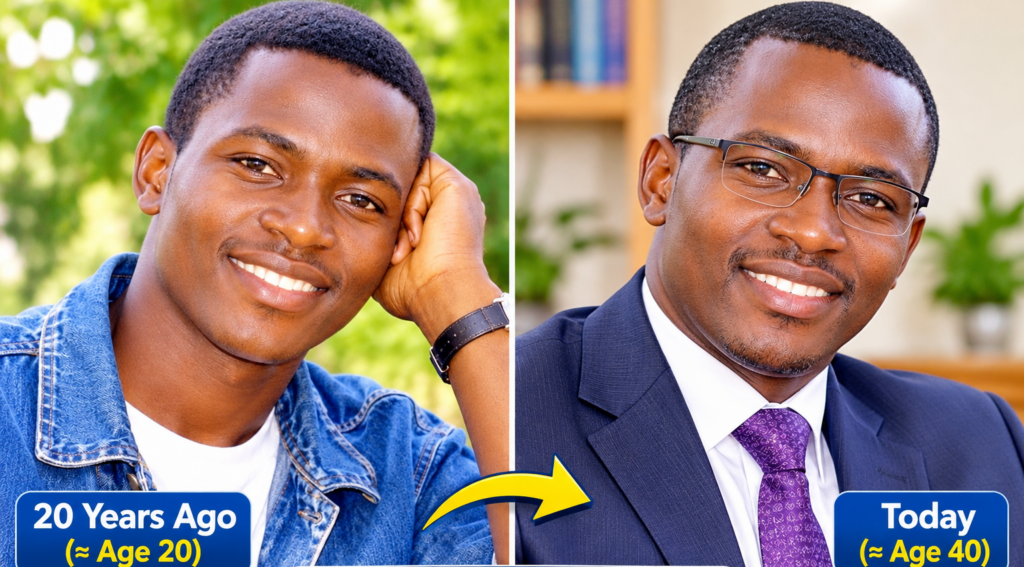
There is a photograph of you somewhere.
Maybe you were five years old. Maybe ten, or twenty. Find that photograph and look at it closely.
The person standing in that photograph has your face, your name, and your history. But so much has changed since then. Your body has changed. Your thoughts have changed. The things that once frightened you may no longer frighten you.
And yet, when someone asks you who you are, you may begin telling them the story of the person in that photograph.
You tell them where you were born, what happened to you, what you lost, and what someone did to you. You describe your memories, and you call that identity.
But listen carefully:
A memory is evidence that something happened. It is not evidence that you must remain the person you were when it happened.
Your memories are part of your history, but they are not the entirety of who you are.
1. The River That Refuses to Flow
Look at a river.
The river may have carried the same name for hundreds of years, but the water flowing through it today is not the same water that flowed through it yesterday.
The water moves. The river continues.
Now imagine the river refusing to flow because it remembers the water that passed through it ten years ago.
Imagine it saying:
“This is who I am. This is what happened to me. I cannot move beyond it.”
That sounds unreasonable, doesn’t it?
Yet many of us do something similar with our lives.
We carry old experiences into new situations. We allow yesterday’s disappointments to influence today’s decisions. We repeat stories about ourselves that were formed during difficult moments in our past.
We confuse continuity with permanence. We assume that because something happened to us, it must continue defining us.
But you can carry your history without remaining imprisoned inside it.
2. You Are a Continuous Process of Becoming
Look at a tree outside your house.
It is not the same tree it was five years ago. Branches have grown. Leaves have fallen. Some parts have died, and new parts have emerged.
Yet at no point did the tree stop being a tree.
It was continuously becoming.
And so are you.
You are not a finished product. You are not a completed object that was placed into existence, never to change again.
You are a living, changing human being.
The person you were yesterday is not the limit of the person you can become tomorrow.
You can learn new skills, develop new habits, build healthier relationships, and change the way you think about yourself.
You are not a fixed point in existence. You are continuously becoming.
This understanding creates room for growth. Your past experiences may be part of your story, but they do not have to become the boundaries of your future.
3. The Identity You Built After the Wound

Now, look at your own life.
Perhaps you made a mistake five years ago. Maybe you trusted the wrong person, lost a business, or entered a relationship that nearly destroyed your confidence.
Or perhaps you did something yourself, something you deeply regret.
And ever since that experience, whenever another opportunity appears, you tell yourself:
“I am not good at business.”
“I cannot trust anybody.”
“I always fail.”
“I am a terrible person because of what I did.”
But what happened is an experience. The identity you created afterward is an interpretation.
Something happened to you once, and you have been repeating its meaning to yourself for years.
Now someone comes into your life and genuinely wants to love you, but you are not meeting that person as they are. You are meeting them through the memory of somebody who hurt you.
An opportunity arrives at your door, but before you even examine it, you remember the last time you failed—and close the door yourself.
Do you see what is happening?
The event ended, but you have continued living inside its interpretation.
The original experience may be in the past, but the mental patterns associated with it can continue influencing your present decisions.
4. How Past Experiences Become Subconscious Programming
At WitsValley, we focus on understanding how repeated thoughts, emotional associations, and habits influence the way we experience life.
Consider someone who lost a business.
At first, the experience was simply a painful event. But over time, the person began repeating thoughts such as:
- “I am not good at business.”
- “I always make the wrong decisions.”
- “I will probably fail again.”
Through repetition, these thoughts may become familiar mental patterns.
When a new business opportunity appears, those patterns may trigger fear and hesitation before the person has even examined the opportunity.
The same thing can happen in relationships.
Someone who was betrayed may begin believing that nobody can be trusted. When a genuinely loving person enters their life, they may interpret innocent actions through the lens of past hurt.
This is why subconscious mind training matters.
When you recognize an old mental pattern, you create an opportunity to practice a new one.
You can learn to respond to the present instead of automatically reacting to the past.
5. You Can Learn From the Past Without Living Inside It
Letting go of the past does not mean pretending that nothing happened.
It does not mean ignoring your mistakes, avoiding responsibility, or trusting everyone blindly.
It means allowing your experiences to teach you without allowing them to imprison you.
If you made a mistake, learn from it.
If you hurt someone, take responsibility and repair what you can.
If someone mistreated you, learn to establish healthy boundaries.
If you experienced failure, examine what happened and develop new skills.
The goal is not to erase your history. The goal is to stop treating your history as a life sentence.
You can remember what happened and still choose a different response today.
The child you were is not the entirety of who you are.
The person who was wounded is not the entirety of who you are.
And the person who made a mistake is not the entirety of who you are.
6. How Your Self-Image Influences Your Future
Imagine that you want to start a business, find a loving relationship, improve your finances, or become more confident.
But deep inside, you keep repeating:
“I am not capable.”
“I am unlucky.”
“I always fail.”
“I am not worthy of success.”
These thoughts can influence what you notice, what you attempt, and how you respond when challenges arise.
When you repeatedly identify yourself with failure, you may begin behaving in ways that reinforce that identity.
But what happens when you begin practicing a different self-image?
What happens when you repeatedly remind yourself:
“I am learning to make wiser decisions.”
“I am becoming more confident every day.”
“I am capable of learning new skills.”
“I am open to opportunities and willing to act on them.”
These statements are not merely words to repeat. They are mental directions you can reinforce through repetition, emotional engagement, and consistent action.
This is one of the foundations of WitsValley subconscious mind training: helping you consciously practice the thoughts and identities you want to strengthen.
7. A WitsValley Practice: Rewriting Your Personal Story
Take a few quiet minutes today and complete this exercise.
Step 1: Find your photograph
Look at a photograph of yourself from years ago.
Honor the person you were. Acknowledge what they experienced and how far you have come.
Remind yourself that you have changed, and you can continue changing.
Step 2: Identify an old story
Write down one experience from your past that still influences how you see yourself.
For example:
“I failed in business, so I am not a successful person.”
Step 3: Separate the event from your identity
Ask yourself:
“What actually happened, and what meaning did I attach to it?”
The event may be that your business failed. The identity you created may be that you are incapable of succeeding.
Those are two different things.
Step 4: Extract the lesson
Ask yourself:
“What did this experience teach me that can help me move forward?”
Perhaps you learned to manage money more carefully, choose partners wisely, or seek professional advice.
Keep the lesson. Release the unnecessary self-condemnation.
Step 5: Create a new identity statement
Write an affirmation that reflects the person you are becoming.
For example:
“I am a growing, capable person. I learn from my experiences, make wiser decisions, and welcome new opportunities with confidence.”
Step 6: Practice your new identity
This is where the WitsValley Alarm Principle can help.
Use a morning alarm as a reminder to repeat your affirmation. Repeat it again in the evening.
As you repeat it, visualize yourself responding to a real-life situation in accordance with your new identity.
If you want to become more confident, imagine yourself speaking confidently.
If you want to become a successful entrepreneur, imagine yourself making thoughtful decisions and taking consistent action.
Then practice those behaviors in your daily life.
The goal is to strengthen the connection between the person you are choosing to become and the actions you take every day.
8. Your Future Is Not Required to Repeat Your Past
Perhaps you have been trying to manifest something significant in your life.
A new car. A home. Financial freedom. A loving relationship. A successful business. A more peaceful and meaningful life.
But perhaps an old story keeps telling you that these things are not possible for someone like you.
Remember this:
The person who experienced yesterday’s disappointment is not the entirety of who you are today.
The person who made yesterday’s mistake is not the entirety of who you are today.
And the person who was wounded in the past is not the entirety of who you are today.
Your memories belong to you, but you do not belong to your memories.
The river is still flowing.
The tree is still growing.
And you—you are still becoming.
Begin Your Awakening Journey With WitsValley
At WitsValley, our mission is to help people understand and train their subconscious minds so they can develop empowering mental patterns, build healthier habits, and create more intentional lives.
Your awakening journey begins when you recognize that you are not limited to the identity you inherited from your past.
It begins when you become conscious of the thoughts you repeatedly think, the stories you repeatedly tell yourself, and the person you are choosing to become.
You are not finished. You are still happening.
Explore WitsValley’s subconscious mind training systems and begin practicing the mental habits that support the life you want to create.
Take your next step toward personal transformation..
Did this resonate with you? Share this post with someone who is still living inside an old story. You might be the voice that reminds them: the river is still flowing, and they can flow too.