
The Parenting Lie Almost Every Good Parent Believes: A neuroscientist’s guide to why worry isn’t love, why guilt ruins your physiology, and the single filter in your brain that changes everything.
You love your teenager.
That is not the problem. The problem is that love, right now, feels exactly like fear.
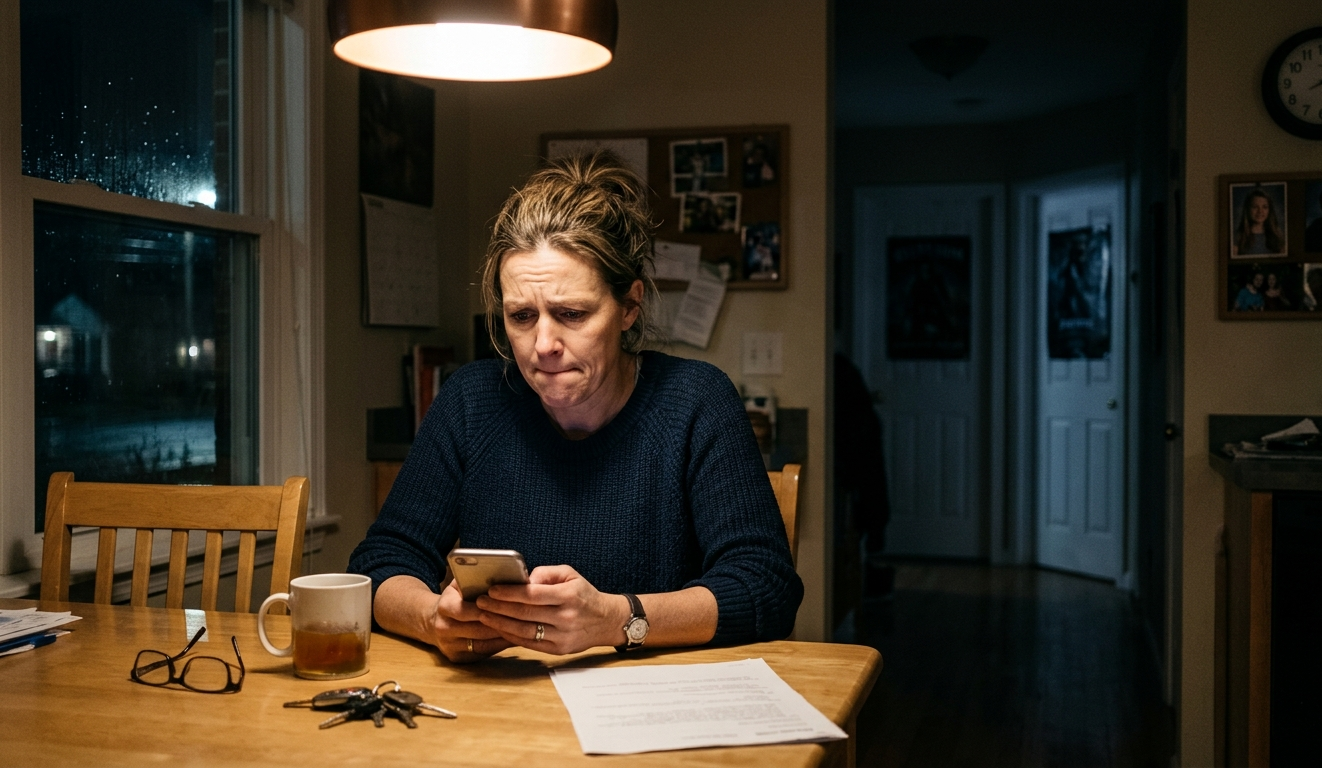
You lie awake at 11:47 PM imagining every worst-case scenario. You replay the fight from this morning—the door slam, the silence, the look on their face that said you don’t get it. You feel guilty for working late. You feel guilty for resting. You feel guilty for breathing when they’re hurting.
And there is a sentence quietly haunting millions of parents right now. It usually sounds something like this:
“I’m not doing enough.”
Not enough time. Not enough patience. Not enough presence. Not enough calm. Not enough energy. Not enough connection.
Because you love your teenager so deeply, your brain translates that fear into constant mental noise. You worry. You replay conversations after they happen. You wonder if you said the wrong thing. You wonder if they’re pulling away. You wonder if you’re failing them without realizing it.
And what makes this so painful is that most parents are trying incredibly hard. But modern parenting has quietly created a psychological trap: Parents are measuring love by exhaustion.
The more depleted you are, the more you feel you must care.
But here is the quiet, exhausting truth no one tells you:
Your brain cannot tell the difference between a real disaster and a vividly imagined one.
That is not a metaphor. That is neurology.
Part 1: The 40 Million Operations Per Second Problem
Your conscious mind—the part that wishes you were calmer, more patient, and more present—operates at about 40 operations per second.
Your subconscious mind operates at 40 million operations per second.
And it does not speak English. It speaks images. Feelings. Repetition.
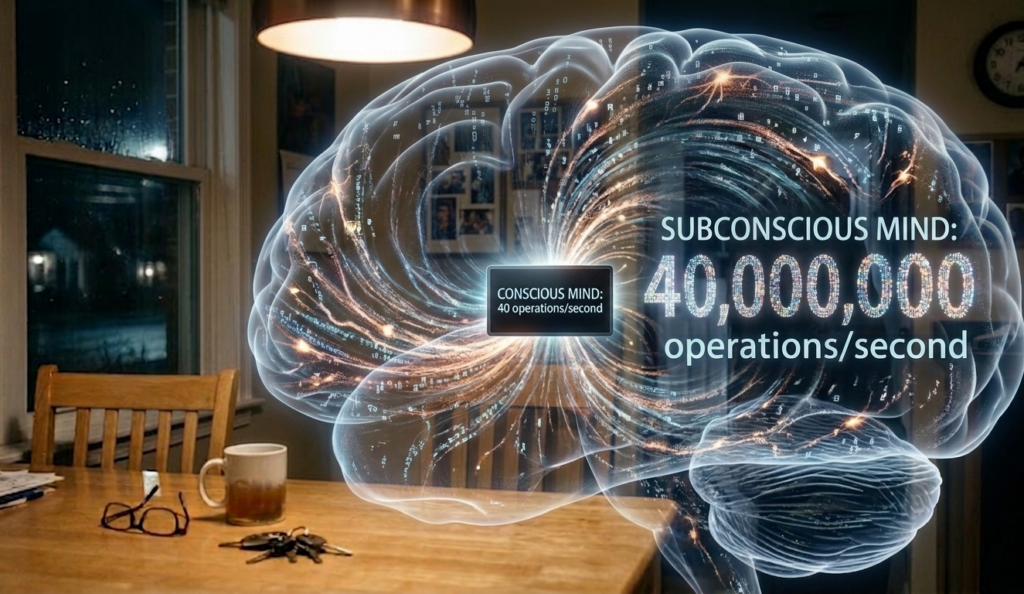
Every time you picture your teenager getting hurt, making a terrible choice, or rejecting you, your subconscious translates that image into real stress chemistry. Cortisol. Adrenaline. Inflammatory signals.
You think you are “caring” by worrying.
Your body thinks you are being hunted by a tiger.
And here is the part that changes everything: You are energetically connected to your child.
Your teenager’s subconscious is reading your frequency, not your words. They don’t hear “I love you.” They feel the tension in your jaw. The anxiety in your silence. The exhaustion behind your smile.
That is not your fault. That is your RAS.
Part 2: Your RAS Is Not Broken. It Is Just Filtering Wrong.
The Reticular Activating System (RAS) is a bundle of neurons at the base of your brain. Its job is simple: show you what you keep telling it is important.
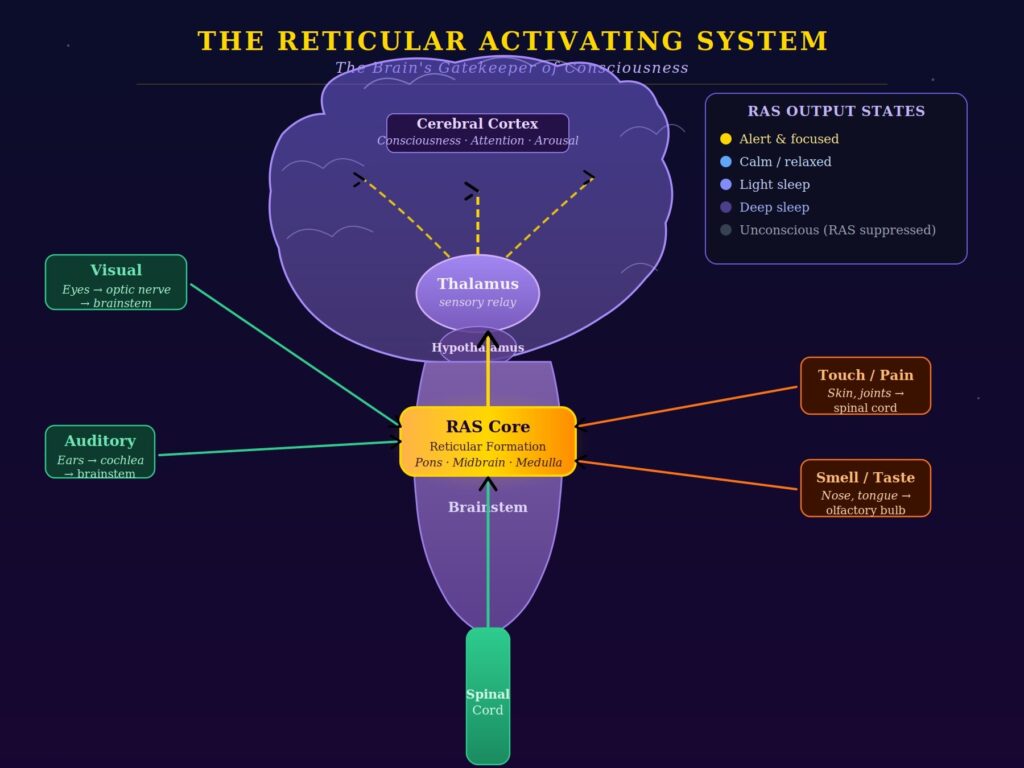
If you constantly affirm “I’m not enough,” your RAS will scan the world for every time you mess up. It will filter out the hugs, the small moments, the texts you sent, the sticky notes you left. It will hand you only the evidence of your failure.
If you constantly replay “I should be doing more,” your RAS will make you feel exhausted even when you are running on empty.
If you worry every night, your RAS will begin to notice every sign of danger—and miss every sign of safety.
But the liberating truth—the one that changes everything—is this:
Your subconscious believes whatever you consistently tell it. Whether it is true or not.
You have been accidentally programming yourself into guilt, worry, and burnout.
You can intentionally reprogram yourself into calm, presence, and vision.
Part 3: Many Parents Are Not Parenting From Presence. They Are Parenting From Survival.
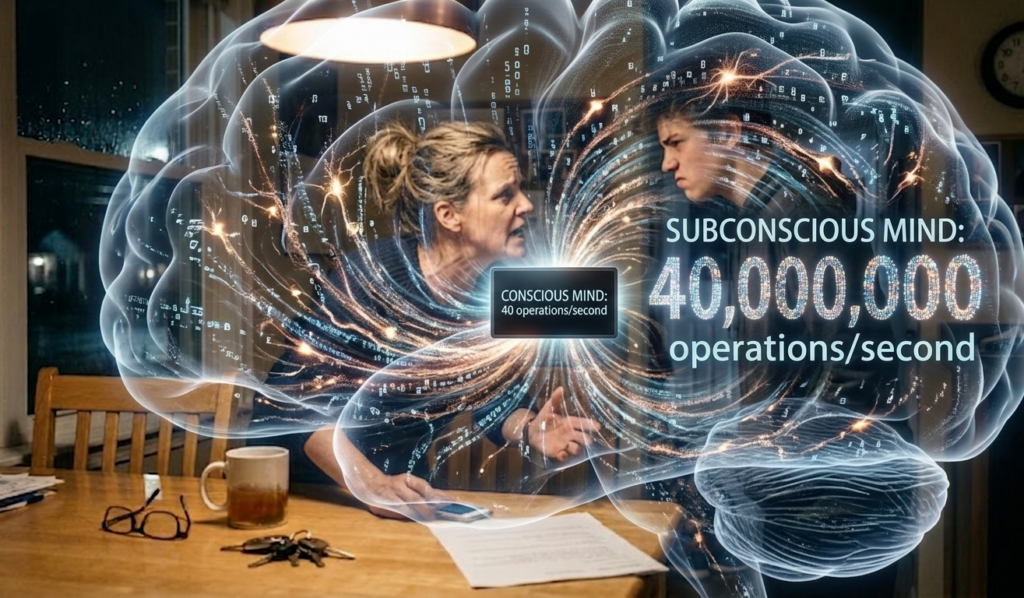
Survival sounds like:
“Don’t mess this up.”
“What if something bad happens?”
“Why am I reacting like this again?”
“Why do I feel guilty even when I’m trying?”
Over time, these thoughts become automatic neural loops. The brain rehearses them so often that they begin to feel like personality.
But they are not personality. They are conditioning.
And conditioning can be interrupted.
Because neuroscience tells us something uncomfortable: A dysregulated nervous system cannot consistently create emotional safety.
And emotional safety is what teenagers need most. Not perfection. Not performance. Not constant lectures. Not endless availability.
Safety.
The kind of safety they feel when your energy is calm instead of reactive. When your face softens instead of tightens. When your nervous system communicates:
“You are safe with me, even when life is messy.”
That changes everything.
Part 4: The Difference Between Worry and Love (Most Parents Get This Wrong)
Here is the sentence I need you to read twice:
Worry is not love. Worry is fear wearing a mask.
Your culture told you that if you aren’t anxious, you don’t care. That is a lie designed to keep you exhausted. The opposite of worry is not indifference. The opposite of worry is vision.
- Worry pictures disaster.
- Vision pictures safety.
- Worry whispers “what if.”
- Vision whispers “you are safe.”
Your teenager does not need your anxiety. They need your peaceful thoughts. Not because you are magical—but because your peace is contagious. Their mirror neurons will unconsciously match your calm.
That is not spirituality. That is neurobiology.
When the brain repeatedly imagines worst-case scenarios, the body responds as if danger is already happening. Stress hormones rise. The nervous system tightens. Attention narrows. Patience decreases. And slowly, anxiety becomes the emotional climate of the relationship.
You have been praying for disaster every single night without knowing it.
You can stop.
Part 5: The 60-Second Shortcut (No Meditation Cushion Required)
You do not need more hours. You need a reprogrammed RAS.
And reprogramming takes 60 seconds. A shower. A commute. A dishwasher load. A moment before you knock on their bedroom door.
Three affirmations. Morning and night. Thirty days.
Not because affirmations are fluffy. Because repetition with feeling rewires neural pathways. That is the same mechanism that creates anxiety. You are just hijacking it for peace.
Here is the core trinity that changes the filter in your brain:
- I release guilt. My love does not require hours—it requires intention.
- I replace worry with vision. I see my teenager safe, whole, and happy right now.
- I parent from exactly where I am. Presence is not about proximity. It is about intention.
Say them tired. Say them angry. Say them even when you don’t believe them. Your ears still hear. Your subconscious still listens.
Part 6: The Replacement Ritual (For 3 AM or 3 PM)
The next time you catch yourself spiraling—picturing their future collapsing, replaying their angry words, rehearsing the lecture you should have given—do this:
- Place your hand on your heart.
- Whisper: “This is worry, not love. I choose love.”
- One slow breath.
- Close your eyes and see one specific image: them laughing. Sleeping peacefully. Eating a meal. Walking into school.
- Think: “You are safe. You are loved. You are held.”
Thirty seconds. That is not denial. That is neural reprogramming.
Because repeated emotional states become learned emotional traits. And you have the power to choose which states you rehearse.
Part 7: Why This Works Even If You Are Apart (Or Just Distracted)
You do not need to be in the same room to change their emotional environment.
Thoughts are frequencies. Your subconscious does not care about distance. When you hold them in a vision of safety, you are not being naive. You are sending a different signal than the one worry was sending.
You cannot be physically present 24/7. No parent can.
But you can be intentionally present in the seconds you have. A 30-second hug. A heart emoji. A sticky note on a pillow. A voice note during your commute. Eye contact across the dinner table.
That is not small. That is cathedral-building.
Because one of the most transformative ideas is this:
Your child does not only experience your actions. They experience your state.
A 30-second interaction with emotional presence can create more safety than three distracted hours in the same room. A calm nervous system can regulate an anxious teenager faster than a perfect speech ever could. And one repaired moment after conflict can strengthen a relationship more than pretending conflict never happened.
Part 8: The Honest Truth About What Happens Next
You will forget. You will yell. You will worry again. That is not failure. That is being human.
But now you have a different option.
You can put your hand on your heart. You can say the words again. You can replace the disaster movie in your head with one quiet image of them safe.
And over days, weeks, months, your RAS will start filtering differently. You will notice the small moment you used to miss. Their subtle bid for attention. Your own win instead of only your mistake. A crack of connection in a chaotic day.
That is not magic. That is neuroplasticity.
Something subtle happens when parents stop living in constant emotional survival mode. They soften. Not into weakness. Into steadiness. They stop interpreting every mood as danger. They stop reacting to every silence as rejection. They stop carrying guilt like proof of love.
And teenagers feel it. Not because the parent became perfect. Because the emotional atmosphere changed. The home becomes lighter. Safer. More breathable.
Part 9: One Sentence to Keep in Your Wallet
“Worry is a prayer for what you do not want. Vision is a prayer for what you do. Choose which one you send.”
This article has been a summary of a complete mind-body system called The Anchored Parent.
It includes 7 sections of love-centered affirmations (releasing guilt, building connection, staying calm, repairing after conflict, resting without shame, replacing worry with vision), audio track guides, a replacement ritual, a fridge summary, a wallet card, and nervous system calming exercises.
It works for parents who are in the same house but feel distant. And parents who are co-parenting across two homes or working across time zones.
Some parents will read this article, take the three core affirmations, and that will be enough. They will put their hand on their heart tonight and feel a little lighter. And that is beautiful.
Other parents will realize something deeper:
Their guilt, rage, and worry are not character flaws. They are inherited neural patterns—from their own childhood, from their nervous system, from generations of parents who never had a tool like this. They have been trying to think their way out of a subconscious problem. And it has not worked.
For those parents, there is a deeper version. A complete system that interrupts the rage-shame cycle in 90 seconds. That reprograms the guilt that lives in your body, not just your thoughts. That becomes a calm anchor even when your teenager is spiraling.
You do not need to decide today.
But if you are tired of measuring your love by exhaustion…
If you are ready to stop parenting from survival and start parenting from grounded emotional presence…
If you want to become the kind of calm, anchored parent your teenager will remember long after the arguments fade…
You know exactly what to do next.
Because deep down, most parents do not want perfection.
They want peace.
And sometimes peace begins with a single new thought:
You are anchored. You are enough. And your teenager is already receiving the version of you that is about to show up.
P.S. — The most important section of the full system is “I Release Worry & Hold Only Vision.” Not because the others aren’t valuable. But because most parents do not realize they have been praying for disaster every single night. You can change that in 60 seconds. The wallet card comes with the booklet. Keep it in your phone case. You will use it more than you expect.