(And why thousands of professionals, students, and high-performers no longer wake up Fear)
By a former chronic overthinker who accidentally rewired his own brain while trying to fall asleep
There’s a reason you wake up anxious.
It’s not because something is wrong with you.
It’s not because you’re not trying hard enough.
It’s not because you’re broken.
It’s because of what happens — and what doesn’t happen — in the first 97 seconds after you open your eyes.
Stay with me. This is going to change how you think about your mind forever.
The Morning I Realized My Brain Was Lying To Me
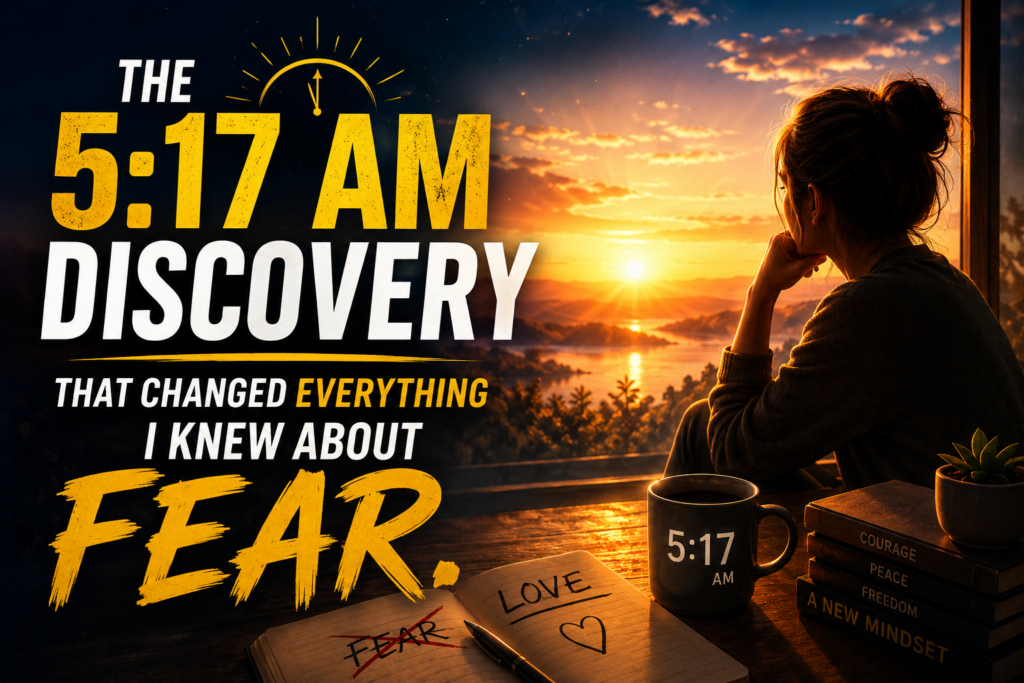
I used to wake up like this:
Eyes open. Heart already racing. Before I even remembered my own name, my brain was already running.
“What time is it? Did I miss something? Oh no, I have that presentation at 10. I’m not ready. They’re going to ask questions I can’t answer. Everyone else is probably fine. Why am I like this?”
By the time my feet hit the floor, I was already exhausted. Already defeated. Already convinced that today would be just as hard as yesterday.
I thought this was normal.
I thought everyone woke up like this.
I thought this was just “who I was.”
Then I learned something that made me stop breathing for a different reason entirely.
The 97-Second Window That Determines Your Entire Day
Here’s what I discovered.
Between sleep and waking, your brain is not in the same state it will be in 10 minutes from now.
For approximately 97 to 300 seconds after you wake up — before you move, before you check your phone, before your “thinking mind” fully engages — your brain is swimming in something called theta waves.
Theta waves (4-8 Hz) are the same brain state experienced by:
- Hypnotherapy subjects
- Deep meditators after years of practice
- People under anesthesia (the light stage)
- Anyone in that floaty space between dreaming and awake
Here’s what matters:
In theta, your brain has no gatekeeper.
Normally, your conscious mind filters information. It decides what’s real and what’s not. It says “that’s a silly thought” or “that affirmation feels fake” or “I don’t believe that yet.”
That’s the critical factor — a term coined by early hypnosis researchers. It’s your brain’s bouncer. And it does a good job keeping out nonsense.
But in theta? The bouncer is asleep.
Whatever you hear, see, or say in those first 97 seconds? Your subconscious accepts it as absolute truth. No filter. No resistance. No “this feels fake.”
Just pure, unfiltered programming.
What Most People Do in Theta (And Why It’s Breaking Them)
Here’s what I realized that made me put down my phone forever.
Most people — whether they’re students, corporate professionals, entrepreneurs, or executives — spend their theta window doing exactly the wrong thing.
They wake up. They grab their phone. They check notifications.
And what do they see?
An email from their boss. A message from a client. A Slack notification about a crisis. A headline about something terrible. A LinkedIn post from a competitor who seems to be winning.
All of that enters their brain in theta state.
No filter. No resistance. Just pure programming.
They are literally programming their subconscious with fear, comparison, and dread — before they’ve even sat up in bed.
And then they wonder why they feel anxious all day.
You cannot consume fear-based content in your most suggestible brain state and expect to feel calm.
You just can’t.
The Experiment I Ran On Myself (That I Didn’t Expect to Work)
I decided to try something.
What if I used that theta window for the opposite?
What if, instead of consuming fear, I planted love?
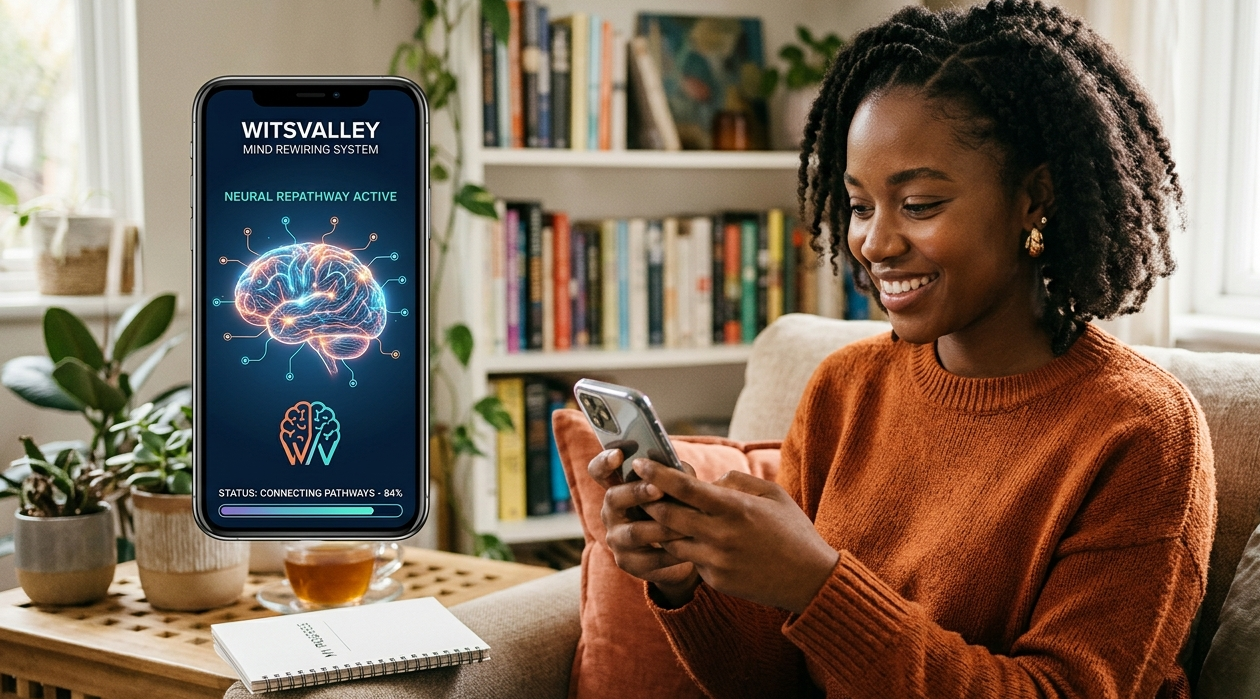
I recorded a 45-second audio in my own voice. Nothing fancy. Just my phone’s voice memo app. I said three sentences:
“Fear is a visitor. Love is my home.”
“I pause. I breathe. I choose love.”
“I am no longer a prisoner of fear.”
I set it as my morning alarm.
The first morning, I woke up to my own voice. I almost cried. Not because it was beautiful — it wasn’t. I hate my recorded voice. But because something in my body relaxed. Something I didn’t even know was tight.
I listened for 45 seconds. Eyes closed. Didn’t move. Just let my own voice wash over me.
Then I opened my eyes.
And for the first time in years… my heart wasn’t racing.
The First Week Was Weird (And I Almost Quit)
I won’t pretend it was magic on Day 1.
Day 2, I felt silly. Day 3, I forgot to set the alarm. Day 4, I almost deleted the recording because my voice sounded weird.
But something kept me going.
Around Day 7, I noticed something strange.
I was in the middle of a high-stakes presentation — one I had been dreading for weeks — and my brain did something it had never done before.
It paused.
Just for a second. Maybe half a second. But in that pause, I heard my own voice: “I pause. I breathe. I choose love.”
And I did.
I paused. I breathed. I didn’t choose fear. I didn’t spiral. I just… continued.
The presentation wasn’t perfect. I was still nervous. But I didn’t fall apart. I didn’t freeze. I didn’t apologize for existing.
That had never happened before.
What I Learned About Fear (That No One Told Me)
Here’s what I discovered in the months that followed.
Fear is not an emotion.
Hear me out.
Fear is a neural pathway — a superhighway in your brain that your thoughts travel down automatically because they’ve traveled down it so many times before.
Every time you worry, you dig that highway deeper.
Every time you avoid, you pave another lane.
Every time you spiral, you add streetlights so the next fear thought can travel even faster.
Your brain is not trying to hurt you. It’s trying to be efficient. It’s saying “Oh, this fear path? We use this one a lot. Let’s make it wider, smoother, faster.”
That’s why anxiety feels automatic. That’s why you can’t just “think positive” your way out of it. You’re trying to drive a tiny love car down a massive fear superhighway. The fear traffic will always win.
You can’t delete the fear highway.
But you can build a new one.
A love highway. Wider. Smoother. Faster. With better scenery.
And every time you choose love — even for one second — you lay down another inch of that new road.
Why 21 Days? (The Science of Neural Change)
You’ve probably heard that it takes 21 days to form a habit.
That’s not exactly right.
The 21-day figure comes from Dr. Maxwell Maltz, a plastic surgeon in the 1950s. He noticed that his patients took about 21 days to adjust to their new appearance after surgery.
But neuroscience has refined this.
The truth is:
- 30 days of repetition begins to create measurable neural change
- 66 days on average for a new automatic behavior (with wide variation)
- 90 days for significant structural change in the brain
So why 21 days?
Because 21 days is the threshold of belief.
After 21 days of repetition, something shifts. You stop trying to change. You start being changed. The new pathway is still thin — but it exists. And knowing it exists changes everything.
Think of it like this:
Day 1-7: You’re cutting through brush with a machete. It’s hard. You get scratched. You want to quit.
Day 8-14: You can see a faint trail. Sometimes you lose it. But you find it again.
Day 15-21: The trail is visible. You can walk it without thinking. It’s not a highway yet. But it’s real.
After Day 21: You maintain it. You walk it every day. Eventually, it becomes the default.
That’s the system.
That’s what I built.
The Exact System That Works for Anyone — Students, Professionals, Executives, Creatives
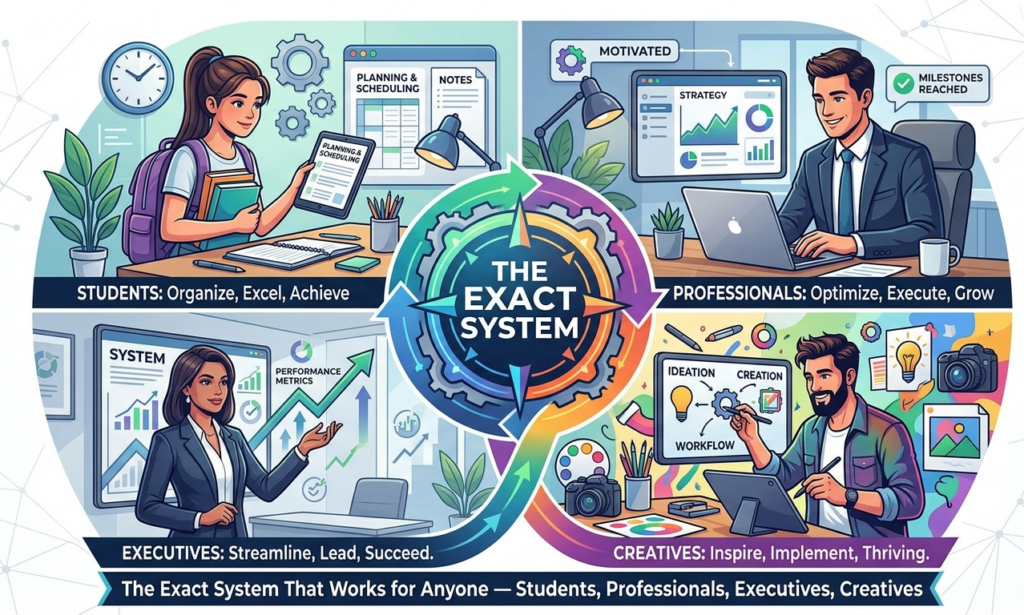
I spent years fighting my own brain in professional settings.
I avoided speaking up in meetings. I said “I’ll just send an email” instead of presenting in person. I convinced myself I was “more of a writer than a talker” or “just not a natural leader.”
All of that was fear.
Fear of judgment. Fear of looking stupid. Fear of being seen as incompetent.
I didn’t know that then. I just thought I was broken.
Now I know: I wasn’t broken. I was running old software. My brain was doing exactly what I had trained it to do — avoid, worry, spiral.
I just never knew I could train it to do something else.
The Fearless Code is the system I wish someone had given me at the start of my career.
It’s not another app. It’s not a course you watch and forget. It’s not a PDF you read once and never open again.
It’s a daily operating system for your brain.
21 days. 10 minutes a day. Morning. Night. One small exercise in between.
That’s it.
No willpower required. No belief required. No “trying harder.”
Just repetition. In the right brain state. At the right time of day.
What Actually Happens Inside Your Brain (Simplified)
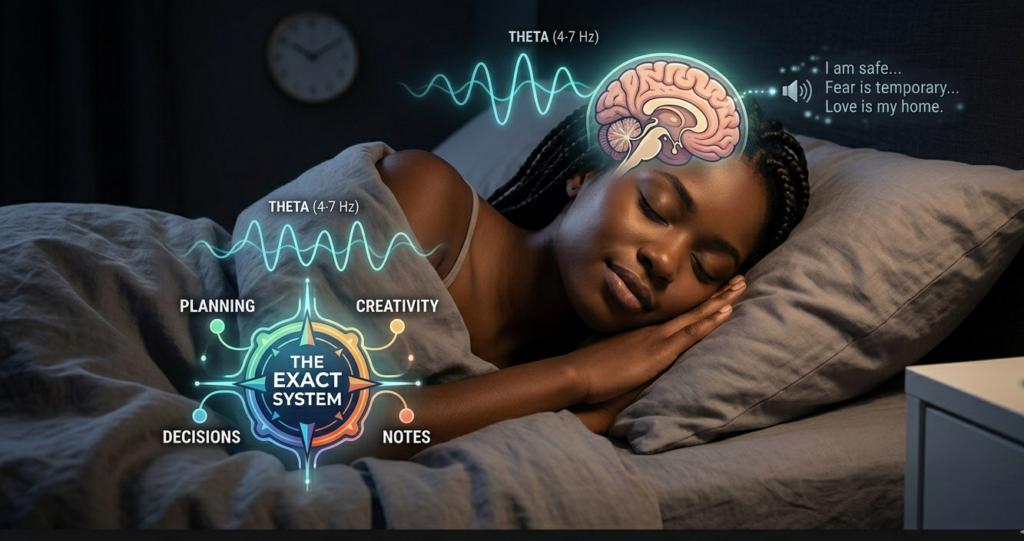
Let me explain what this system does, step by step.
Morning (Theta window, 45 seconds)
Your alarm plays your own voice. Your subconscious hears: “Fear is a visitor. Love is my home.”
No filter. No resistance. Just pure acceptance.
Your first thought of the day is reprogrammed from “I’m tired, I’m scared, I’m not ready” to “I am safe. Fear is temporary. Love is where I live.”
This takes 45 seconds. You don’t have to believe it. You just have to hear it.
Daily Exercise (5 minutes)
Each day, you catch one fear pattern.
Day 1: You write down three situations where you felt stuck. You ask: What fear is underneath?
Day 8: You flip those fears into love-based truths.
Day 15: You take one tiny action that fear said not to take.
Small. Specific. Doable.
Each exercise builds one inch of that love highway.
Night (Theta transition, 1-2 minutes)
As you fall asleep, your brain enters theta again. This time on the way down instead of the way up.
You play a soft audio — your voice, slower, whisper-quiet. The same three sentences.
Your subconscious absorbs them as you drift off.
While you sleep, your brain replays these words. It consolidates them. It files them under “truth.”
You wake up lighter. Not because you’re trying. Because your brain changed while you rested.
Real People. Real Results. Real Lives Changed.
The Corporate Executive
“I’ve been a VP for eight years. I can lead a team of 200 people. But put me in a room with the C-suite for a presentation? My voice would shake. My mind would go blank. I thought I just wasn’t ‘executive material.’
After 21 days of The Fearless Code, I presented our Q3 results to the board. My hands didn’t shake. My voice didn’t crack. And when they asked a hard question, I didn’t freeze. I breathed. I answered. I sat down.
My CEO asked me afterward if I’d been working with a coach. I said, ‘Something like that.'”
— David, 47, VP of Operations
The Sales Professional
“Cold calling used to destroy me. I’d sit at my desk for 20 minutes before making the first dial. I’d rehearse. I’d stall. I’d check email. Anything to avoid the fear.
The Fearless Code didn’t make me love cold calls. It made me stop fearing them. I still feel nervous. But now I dial anyway. My numbers are up significantly since I started. Not because I got better at selling. Because I stopped selling from fear.”
— Rachel, 34, Account Executive
The Graduate Student
“My thesis defense was my nightmare. Two years of work, and I was going to crumble in front of my committee. I could barely eat the week before.
I found The Fearless Code three weeks before my defense. I did it every day. Morning alarm. Daily exercise. Night audio.
The day of my defense, I walked in and something was different. I wasn’t calm exactly. But I wasn’t drowning. I defended. I passed. My advisor said it was the most composed she’d ever seen me.”
— Priya, 26, PhD Candidate
The New Manager
“I got promoted to manager six months ago. I thought I’d be happy. Instead, I was terrified. Every decision felt enormous. Every conversation felt high-stakes. I lay awake at night replaying everything I said.
The Fearless Code didn’t teach me management skills. It taught me how to stop my brain from treating every meeting like a threat. I’m still learning to be a good manager. But at least now I’m not fighting panic while I do it.”
— Marcus, 29, Team Lead
The Entrepreneur
“Starting my own business was supposed to be freeing. Instead, it was constant fear. Fear of not making payroll. Fear of bad reviews. Fear of looking like a failure in front of my peers.
I didn’t realize how much fear was driving my decisions until I started this system. I was making choices from scarcity — discounting my prices, overworking, saying yes to bad clients.
After 21 days, something shifted. I’m still afraid. But I don’t let fear make the decisions anymore. I let love make them. And my business has never been healthier.”
— Sophia, 38, Founder
The Healthcare Professional
“Working in the ER during a very difficult period broke something in me. Not trauma exactly. But a constant, low-grade fear that never turned off. I’d wake up already on edge. I’d go to work already exhausted.
I tried therapy. I tried medication. Both helped. But the Fearless Code did something different. It changed my default setting. I don’t wake up in fight-or-flight anymore. I wake up neutral. And neutral is a miracle.”
— Dr. James, 44, Emergency Physician
The Public Speaker
“I speak in front of crowds for a living. And I dreaded every single second of it. The days before an event, I couldn’t sleep. The hours before, I couldn’t eat. I thought that was just the price of doing what I do.
The Fearless Code taught me that performance anxiety isn’t mandatory. It’s optional. It’s just a neural pathway. And pathways can be changed. I still get nervous before big talks. But now it’s excitement, not dread. There’s a difference. And I never knew I could feel it.”
— Michael, 52, Keynote Speaker
Who This System Is For
This is for you if:
- You wake up anxious more mornings than not
- You have a presentation, meeting, or performance coming up that fills you with dread
- You avoid opportunities because of fear (speaking up, applying for roles, asking for what you want)
- You have negative self-talk that won’t shut up — especially before important moments
- You compare yourself to others and always feel less than
- You’ve tried “positive thinking” and it felt fake
- You’re tired of fighting your own brain every single day
- You’re a professional who knows your stuff but freezes when it’s time to present it
- You’re a leader who feels like an imposter
- You’re a parent who wants to show up more calmly for your family
- You’re anyone who is exhausted by the mental energy fear consumes
This is also for you if:
- You’re a student struggling with exam anxiety or social fear
- You’re an artist paralyzed by perfectionism
- You’re an athlete dealing with performance anxiety
- You’re a public speaker who dreads the moments before walking on stage
- You’re anyone who has ever said “I’m just an anxious person” as if it were permanent
This is not for you if:
- You’re looking for a magic solution that requires zero effort (this takes 10 minutes a day)
- You have unprocessed trauma that needs professional support (please see a therapist first)
- You’re not willing to record your own voice (your subconscious needs YOU)
If you’re in the first group — any part of it — you’re in the right place.
The Hidden Cost of Staying the Same
There’s a cost to staying stuck in fear.
It’s not a price tag. It’s not a dollar amount.
It’s another meeting where you didn’t speak up.
Another opportunity you didn’t apply for because your brain said “What if?”
Another morning of waking up with a racing heart before you even remember why.
Another night of lying awake replaying everything you said.
Another year of knowing you have more inside you but feeling unable to access it.
The cost of not changing is everything you could have become.
I don’t say that to be dramatic.
I say it because I lived it.
I say it because I’ve watched professionals spend decades hiding in plain sight.
I say it because I’ve seen the regret of those who waited too long.
And I’ve seen the relief of those who finally decided to rewire.
What You Get When You Start
The Morning Theta Alarm Script
A 45-second audio template. Record it in your voice. Set it as your alarm. Wake up reprogrammed.
The Nighttime Sleep Script
A 1-minute audio. Soft. Slow. Whisper-quiet. Plays as you fall asleep. Rewires while you rest.
21 Daily Rewiring Exercises
Five minutes each. One per day. Small enough to do. Powerful enough to change you.
The Emergency 60-Second Fix
For panic. For spirals. For the moments before a presentation when fear feels like drowning. Audio + printable card. Stops it in seconds.
The Pocket Card
Print it. Laminate it. Carry it in your wallet. Read it before meetings, presentations, or any high-stakes moment.
The Tracker
One page. 21 boxes. Check each day. Watch yourself change.
The Maintenance Guide
What to do after Day 21. How to keep your rewired brain forever.
The Most Important Sentence In This Entire Post
Fear is not your identity.
It’s just a signal. A neural pathway. A program that can be rewritten.
You are not broken.
You are not damaged.
You are not “just an anxious person” or “not a leader” or “bad under pressure.”
You are a brain with old software that needs an update.
And updates are possible.
One Last Thing Before You Decide
I almost didn’t write this post.
Not because I don’t believe in the system. I built it. I use it. I watch it change lives — across industries, ages, and levels of seniority.
But because I know how this looks.
Another self-help system. Another promise. Another “21 days to a new you.”
I get the skepticism. I’d feel it too.
So here’s what I’ll say instead of selling you:
Try the morning audio for three days.
Just three.
Record your voice. Set it as your alarm. Listen for 45 seconds before you touch your phone.
Don’t do anything else. Don’t do the exercises. Don’t buy anything. Just try the morning.
If nothing changes after three days, you’ve lost nothing but three minutes.
But if something shifts — if your heart doesn’t race, if your first thought is softer, if you catch yourself breathing before spiraling —
Then you’ll know.
And you can come back for the rest.
The Door Is Open
The Fearless Code includes everything you need to rewire your brain from fear to love in 21 days.
Audio scripts. Daily exercises. Emergency tools. Printable cards. Tracker. Maintenance guide.
Lifetime access. Guaranteed.
If you do the work and nothing changes, there’s a full guarantee. No questions.
But here’s what I suspect will happen.
I suspect you’ll wake up on Day 22 and realize you haven’t spiraled in a week.
I suspect you’ll walk into a meeting and not scan for threats.
I suspect you’ll present without your voice shaking.
I suspect you’ll hear yourself say something kind — to yourself — and not even realize where it came from.
I suspect you’ll finally understand that fear is a visitor.
And love is your home.
Instant access. Start tomorrow morning. Your theta window is waiting.
P.S. — The theta window opens tomorrow at whatever time you wake up. You can spend it scrolling. Or you can spend it rewiring. The choice is yours. But the window is always there. And it doesn’t wait.
P.P.S. — Thousands of people have already walked through this door. Corporate executives. Sales professionals. Graduate students. Entrepreneurs. Healthcare workers. Teachers. Artists. Athletes. Some of them were exactly where you are right now. Skeptical. Tired. Hopeful despite themselves. They clicked the button anyway. And none of them regret it.
P.P.P.S. — If you’re reading this and something in your chest says “this is for me” — that’s not hope. That’s your rewired brain already starting to wake up. Don’t ignore it.
Fear is a visitor. Love is your home.
The Fearless Code
21-Day Mind Rewiring System
For anyone ready to stop fighting fear and start living from love — whether in the boardroom, the classroom, or your own living room.